
5 Ways We Use AI In Our Video Production Process
In many regards the creative world is in the middle of a shakeup. We’ve been around for several of these, as the democratization of cameras, editing software, and distribution platforms over the last 15 years all played a large role in our own successes as a video production company. Everybody has a well-equipped camera these days, and video is quietly replacing other forms of media. What once may have been a print ad or a static digital campaign can easily be a series of videos nowadays. There is massive opportunity in video being the medium of the moment, and that’s one reason we feel professional video production matters more than ever.
But artificial intelligence tools are a part of the current shakeup. There are arguments going on about the role of generative AI in video production, but right now we see it as more of a power tool than anything that’s meant to replace us. It’s a power tool we lean on for efficiency and to minimize the difficulties of various stages of the video production process. But there are ways it empowers us as creatives as well, so we thought we’d jump in and discuss some of the ways we’ve implemented AI into our workflows.
Transcription
While generating images and writing essays is where a lot of the AI glamour resides, it’s quietly been doing something far more helpful to us in the early post-production process. Transcribing interviews is a long, tedious process, with every minute of video captured requiring sometimes twice that time to get its contents down on paper. A single interview can even generate hours or more of raw footage. Multiplying that across several subjects and a few shooting days per video production, and our producers and editors can find themselves buried in material before the creative work even begins.
But this is a step in the process that a machine can really help out with. AI-generated transcripts prevent hours of footage scrubbing and allow us to quickly identify lines that carry the most weight and start building an edit around them. With a task like transcription off our plate, we also have more capacity for creative thinking along the way. The transcription process was one of the earliest places AI found its way into our workflow, and it’s made building content libraries with clients much more efficient and easier to refer back to on later projects.
Sound
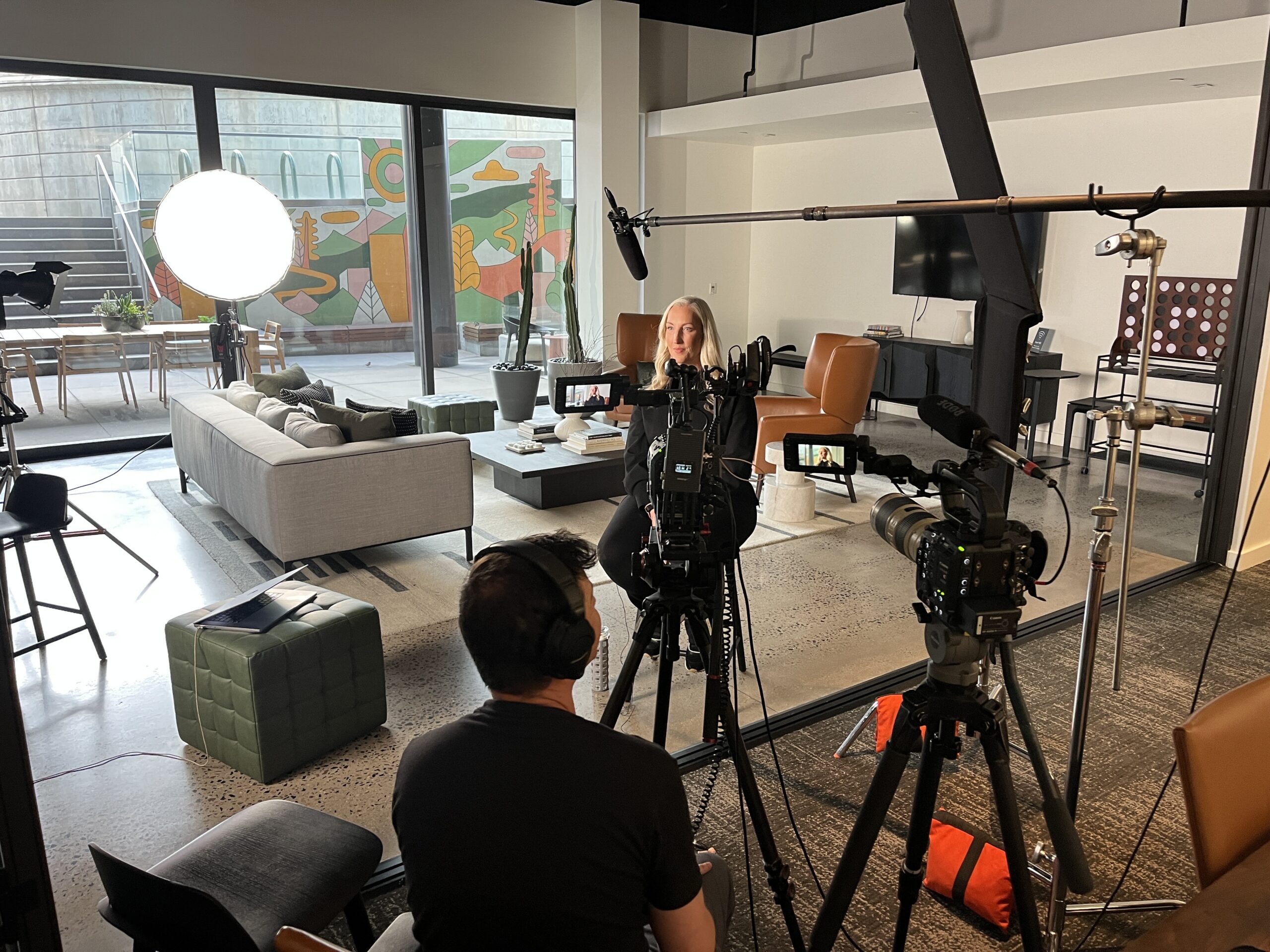
Audio can be one of the most unforgiving aspects of any video production, as viewers will typically tolerate imperfect visuals far longer than they’ll put up with poor sound. We often shoot in environments that come with hurdles. Location shoots can include office buildings, event spaces, and public outdoor areas, none of which are ideal for capturing clean audio. The hum of fluorescent lights, the rumble of HVAC systems, and the chatter of conversations are all things we’ve learned to work around over the years.
AI has become a helpful hand along the way as well. This is especially true after the fact, as AI-driven noise removal and audio balancing tools have become better and better with updates to editing software over the years. Shooting conditions haven’t changed, and there will always be things in the way of capturing perfect audio. But what used to require extensive manual work in the edit bay can now be handled quickly and with pretty impressive precision with AI audio tools, allowing us to deliver clean, professional audio no matter where a shoot may take place.
Visuals
Moments can come during a video production when the footage available isn’t quite enough to tell the story the way we initially envisioned it. Sometimes a cutaway that would perfectly illustrate didn’t present itself during a shoot. Sometimes a location that would add context to an interview wasn’t accessible at the time of shooting. These things happen, but AI-enhanced visuals and even generative AI are tools that can be turned to in such situations.
Implementing such tools in the right way allows us to fill gaps in a video production without compromising the story we’re trying to tell. But knowing when to reach for them matters in the same way as knowing which camera or lens to grab for a shot. If these become a crutch rather than a complement, a video can feel inauthentic very quickly. This is where the creativity that emerges in post-production becomes so important. An experienced editor or producer knows the difference between a gap that AI can fill and one that requires a human solution.
Scripting
The script is the backbone of any quality video production, whether it emerges as a guide for the shoot itself or is written using already-captured footage and interviews. This is where the story is built, and it’s also where a brand’s voice is most exposed. Getting the script right makes a video feel like a natural extension of the company. Getting it wrong can see a lot of quality visual assets go to waste. We’re incredibly deliberate about how AI enters the scripting process, and we haven’t found much use for it as a creative tool.
But AI can be a useful script editor. When a script or video is running long or a particular section isn’t landing as well as it could, AI tools can help trim word counts and tighten phrasing without sacrificing a client’s voice. What it can’t do is generate that voice from scratch. A script produced entirely by AI will flatten a company, a brand, and a video into something generic, something that looks and sounds like everything else out there. That’s precisely the kind of content Zerosun exists to help clients avoid, and it’s become one of the reasons we’re constantly reminding them that video content doesn’t have to be boring.
Pre-production
The work that takes place before a camera ever rolls is some of the most important work in the entire video production process. Pre-production is where a video gets its creative direction, where the raw ideas, client conversations, and research all get molded into an overall vision for the team to execute together. It’s also one of the more time-consuming phases, particularly when it comes to keeping materials organized and developing ideas into narratives and structures that can support the message and intention of a video.
Where AI can be of use in a process like this is as a thinking partner. Notes and transcripts from conversations and creative sessions can be fed into AI tools to help with treatments, outlines, and potential interview questions. What might otherwise take hours of organizing and synthesizing can be accelerated to a certain extent, while at the same time complementing our own natural creative processes. And while AI can be helpful to bounce ideas off of, it can’t determine what a story should be, who should tell it, or why it matters. All of that still belongs to us.
The Zerosun Newsletter
If you’ve enjoyed this article, join our email list to receive Welcome To the Universe, our monthly newsletter. There we share more insights into AI in video production, behind the scenes from some of our projects, and plenty more that allows you and us to get to know one another better.